Hoverboard Buying Guide: Licenses, Safety, Cost & Best Models for Every Rider
You’ve got questions. Lots of them. I’ve been there, wobbling on a friend’s board, arms flailing like a startled penguin, thinking about all the myths I’d heard. So let’s cut through the noise. I’ve put together this no-fluff, tell-it-like-it-is guide that answers every single one of those burning questions you typed into Google. We’re covering licenses, sidewalk rules, real safety talk, what your money gets you, weight limits, beginner picks, heavy rider champs, lifespan, and how to choose the board that feels like it was made for you.
Hoverboard Buying Guide – Grab a coffee, put your feet up (they’ll be hovering soon enough), and let’s dive into the wonderful, wobbly world of hoverboards.
Do You Need a License to Ride a Hoverboard?
Let’s kick things off with the big one. You’ve seen those guys on YouTube getting pulled over, or maybe your neighbor muttered something about “needing a permit.” So, do you need a driver’s license to hop on a self-balancing scooter?
No, you do not need a license. In virtually every country and U.S. state, hoverboards are classified as “personal assistive mobility devices” or simply as toys—not motor vehicles. That means no DMV visit, no registration, no plates, no insurance. You don’t need a driver’s license, a learner’s permit, or even a bicycle license. If you can stand up and lean, you’re technically legal.
Think of it like riding an electric skateboard or a Segway. The law generally doesn’t treat you as a car. However—and this is a huge “however”—local rules can slap restrictions on where you ride, not on whether you need a permit. You won’t be asked to flash an ID to buy one or step on one. So breathe easy. Your wallet stays in your pocket, and you’re free to hover as long as you follow the rules of the path.
Now, if your hoverboard can hit 30 mph and looks more like a motorcycle, we’re in different territory. But for 99% of the boards you’ll see on Amazon or at Walmart, no license is required. Ever.




Can You Ride a Hoverboard on Sidewalks? The Maze of Local Laws
So if no license is needed, can you just zip down the sidewalk past your local coffee shop? The answer is a frustratingly classic “it depends.”
In some cities, hoverboards are welcomed on sidewalks just like a pedestrian. In others, they’re banned from sidewalks and confined to private property or bike lanes. Why the confusion? Because laws haven’t caught up with the tech. When hoverboards exploded onto the scene, legislators scrambled. Some lumped them in with electric scooters, others with skateboards, and a few just shrugged and banned them outright from public spaces.
Here’s a snapshot:
- California: You can ride on sidewalks, bike lanes, and paths as long as you yield to pedestrians and don’t go over 15 mph. Helmets are required if you’re under 18.
- New York City: Technically, self-balancing scooters are prohibited on streets and sidewalks, but enforcement is mostly against reckless riding. Many people still glide through parks and bike lanes.
- UK: Hoverboards are illegal to ride on public pavements and roads; they’re only allowed on private land. Yes, it’s a bummer.
- Australia: The rules vary by state. Queensland allows them on footpaths and bike paths; New South Wales says no to roads and footpaths unless they’re shared paths.
The golden rule? Check your city’s municipal code before you cruise. I’ve learned the hard way that a quick Google of “your city + hoverboard laws” saves you from an awkward conversation with a park ranger. And always, always be a good ambassador: slow down around pedestrians, announce yourself with a friendly “on your left,” and don’t be that person weaving through strollers at top speed.
Are Hoverboards Safe? The Honest Truth (And the One Thing That Changed Everything)
Now for the elephant in the room—or rather, the flaming hoverboard that was all over the news in 2016. Are these things safe, or am I riding a potential bonfire?
Let’s rip the band-aid off: Early hoverboards, the cheap no-name ones, were a disaster. They used knockoff lithium-ion batteries without proper management systems, resulting in overheating, fires, and a lot of bad press. But here’s the twist—that was almost a decade ago. The industry got a massive wake-up call, and today, safety is a completely different ballgame.
The game-changer? The UL 2272 certification. This is a rigorous safety standard introduced specifically for self-balancing scooters. A UL 2272-certified board has passed extensive testing on its electrical drive train, battery, and charger system to ensure it won’t overheat, short-circuit, or catch fire. It’s the gold stamp of “I won’t burn your house down.”
So, are modern hoverboards safe? Yes, if you buy a UL 2272-certified model. They’re as safe as any battery-powered gadget—think laptop, e-bike, or power tool. The real risk now isn’t the hardware spontaneously combusting; it’s user error. Wobbling into traffic, not wearing a helmet, or trying to ride in the rain can still land you in the ER. Treat it with respect, gear up, and your hoverboard becomes a stable, fun extension of your body.
1. The UL 2272 Stamp of Approval
When you shop, look for the “UL 2272” logo on the box or in the product description. No certification? Walk away. It’s not worth saving twenty bucks. Brands like Segway, Razor, Swagtron, and Gotrax all proudly display this cert because they know it’s the only way to earn your trust. Think of it as the seatbelt for your ride—non-negotiable.
2. Smart Battery Management: Your Silent Guardian
Beyond the UL sticker, a quality hoverboard has a smart Battery Management System (BMS). This little brain monitors each cell’s temperature, voltage, and charge cycles. If something goes wonky, it shuts the board down before trouble starts. It’s the difference between a controlled landing and a fiery freefall. When someone says, “Don’t buy cheap electronics,” this is exactly what they mean.
Hoverboard Buying Guide: How Much Does a Quality Hoverboard Cost? (And What’s Too Cheap?)
You’ve probably seen hoverboards ranging from $80 to $800 and wondered, “What am I actually paying for?” Here’s the breakdown of what your money gets you, stripped of marketing fluff.
- Budget Range (100 – 200): You can find reliable entry-level boards here, usually with 6.5-inch wheels, basic 250-watt motors, and a top speed of 6-7 mph. They’re perfect for kids and teens on smooth pavement. Look for brands like Swagtron or Hover-1, always with UL certification. Don’t expect off-road heroics or long battery life, but they’ll get you rolling.
- Mid-Range (200 – 400): The sweet spot for most riders. You’re getting 8-8.5-inch wheels, 350-400W dual motors, Bluetooth speakers, companion apps, and a range of 8-12 miles. These handle slight inclines and sidewalk cracks without throwing you off. The build quality jumps, and the riding feels more planted.
- Premium (400 – 800+): This is where you meet 10-inch all-terrain tires, self-balancing go-kart attachments, robust frames, and weight limits over 265 lbs. Think Segway or high-end Halo Rover models. If you want to ride on gravel, grass, or hills, this is your territory.
The danger zone? Anything under $80. Those impulse-buy boards on marketplace sites often skip the UL certification and use mystery cells that look like AA batteries taped together. You’re not just buying a board; you’re buying a headache.
What to Look for When Buying a Hoverboard: A No-Nonsense Checklist
Hoverboard Buying Guide – You’re ready to click “add to cart.” Stop! A hoverboard isn’t a pair of socks. There’s a handful of specs that completely define your experience. Let’s build your personal checklist so you never regret a purchase.
1. Battery and Certifications (Don’t Skip This!)
I sound like a broken record, but it’s that important. UL 2272. Must have. Next, look at battery capacity in watt-hours (Wh). A typical board has 100-160Wh, giving you 7-10 miles. Higher Wh equals longer rides. Also, check if the battery is a genuine Samsung or LG cell. It lasts longer and holds a charge better than generic cells.
2. Wheel Size and Terrain Magic
Wheel size is the unsung hero of stability. 6.5-inch wheels are light and nimble on smooth indoor surfaces or pristine sidewalks. 8-inch and 8.5-inch wheels are the versatile choice, absorbing cracks and small pebbles. 10-inch off-road wheels laugh at grass, gravel, and compact dirt. Bigger wheels mean a smoother ride, easier balancing, and less foot fatigue—like going from roller skates to a mountain bike.
3. Motor Power and the Need for Speed
Most boards list motor power in watts (250W to 500W per motor). A 300W dual-motor setup is enough for a 170 lb rider on flat ground. If you weigh more or face hills, aim for 350W-400W. Speed isn’t everything on a hoverboard—most cap at 7-10 mph because that’s really all you need when leaning forward with your face potentially meeting the pavement. Trust me, 10 mph feels like warp speed when your chin is the front bumper.
4. Weight Capacity and Frame Build
Every board has a published minimum and maximum weight limit. Ignore this at your own peril. Riding a board over its limit strains the motors, kills battery life, and makes it handle like a drunk shopping cart. Look for reinforced frames if you’re a heavier rider (we’ll dive into that soon). Also, if you’re buying for a child, a board with a high minimum weight (say, 44 lbs) might not register their movement properly, making it jerky or unresponsive.
Hoverboard Weight Limits Explained: Why Size Really Does Matter
Hoverboards rely on pressure sensors under your feet. The board needs enough weight to activate the self-balancing mechanism. Too light, and it won’t go. Too heavy, and it screams for mercy.
Most standard boards have a weight range of 44 lbs to 220 lbs. That lower limit is critical for kids—if a 35-pound child hops on a board that needs 44 lbs minimum, it might not sense them correctly, leading to sudden stops or uncontrolled wobbles. The upper limit, on the other hand, affects performance. Push a board beyond its max weight, and you’ll notice sluggish acceleration, reduced range, and an unnerving flex in the deck.
But what if you’re a bigger guy or gal who doesn’t want to be left out? The hoverboard world has evolved.
Best Hoverboards for Heavy Riders
You need a board that’s built like a tank but rides like a dream. Look for a weight capacity of 265 lbs or more, sturdy aluminum frames, and big tires. Here are the champions:
- Swagtron Swagboard Outlaw T6: With a 420 lb max weight, 10-inch rugged tires, and a reinforced body, this thing is the pickup truck of hoverboards. It’s not subtle, but it’ll carry you over just about anything.
- Segway Ninebot S: Technically a self-balancing scooter with a knee control bar, it supports up to 220 lbs officially, but handles heavier loads gracefully due to its 800W motors. The wider platform adds stability.
- Halo Rover X: All-terrain monster rated for 264 lbs, with IPX4 water resistance and beefy 8.5-inch tires. It feels supremely planted.
If you’re over 250 lbs, don’t even glance at 6.5-inch wheel boards. You’ll want that wider footprint and bigger contact patch to distribute weight and maintain balance. It’s like the difference between standing on a yoga ball versus a sturdy step stool.
Best Hoverboards for Beginners: Start Smooth, Stay Upright
Ah, the first ride. It’s a cocktail of excitement, terror, and the distinct feeling that your feet are having an argument. As a beginner, you need a board that forgives mistakes. That means a gentle learning curve, not a rocket.
The ideal beginner board has:
- 6.5- or 8-inch wheels for a lower center of gravity.
- A learning mode that limits speed to 3-4 mph while you find your balance.
- Good weight sensing, so it responds smoothly, not jerky.
- Non-slip foot pads because panic-sweaty feet are real.
Top picks:
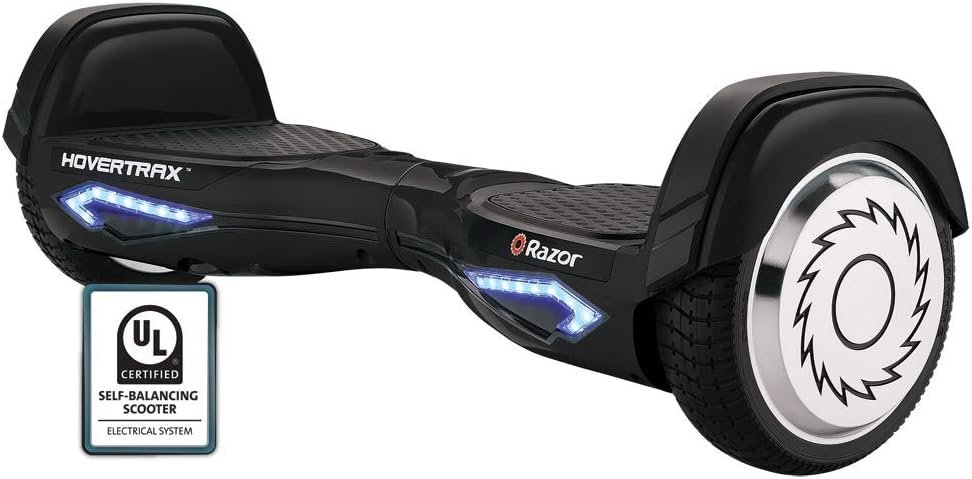
- Razor Hovertrax 2.0: It comes with Razor’s “EverBalance” tech that practically holds your hand, auto-leveling the platform so stepping on is drama-free. Smooth, quiet, and not intimidating at all.
- Swagtron T580: An app-connected board with learning mode, Bluetooth speakers, and a very forgiving ride. It’s lightweight, so carrying it back when you bail is less of a chore.
- Gotrax SRX Mini: Designed for kids but great for petite adults too, with a 4 mph learning cap and bright LED lights that make you feel like a sci-fi hero.
Rhetorical question: Do you remember learning to ride a bike? That terrifying moment when your dad let go? A good beginner hoverboard is like having that steady hand on your shoulder until you’re ready.
How Long Do Hoverboards Last? Miles, Charges, and the Aging Battery
Hoverboard Buying Guide – You’re not buying a lifetime companion. A hoverboard, like any battery-powered device, has a finite romance with you. So, how many sunsets will you share?
On average, a well-maintained hoverboard lasts 2 to 4 years or about 300–500 full charge cycles. That translates to roughly 3,000–5,000 miles before the battery seriously degrades. The frame and motors might outlast the battery, but once the range drops below 50% of its original, it’s time to reconsider.
Factors that kill lifespan:
- Leaving it fully drained for weeks. Lithium-ion batteries hate being empty. Store it at 40-60% charge if you’re not riding for a while.
- Excessive heat or cold. Don’t leave it in a hot car or a freezing garage.
- Overloading. Consistently pushing the weight limit fries the motors and battery faster than you can say “warranty void.”
Treat your board’s battery like a pet goldfish—keep it at a comfortable temperature, feed it partial charges, and don’t expect it to live forever. With a little love, you’ll get thousands of happy miles.
How to Choose the Right Hoverboard for You: A Personal Match
Here’s where we tie it all together. Choosing the right hoverboard isn’t about finding the “best” one on a listicle; it’s about finding the one that fits your life. Ask yourself these questions:
- Where am I riding? Smooth office floors and sidewalks? 6.5-inch wheels, done. Cracked pavements and occasional dirt paths? 8-inch or 8.5-inch. Actual off-road adventures? 10-inch rugged tires.
- How much do I weigh? Under 150 lbs, any UL-certified board works. Over 200 lbs, you need a reinforced frame and higher power. Over 250 lbs, you’re in all-terrain heavy-rider territory.
- Who’s riding? If it’s for your 10-year-old, a mini or entry-level board with a low minimum weight requirement is key. If it’s for you, a grown adult with knees that remember the ’90s, prioritize stability and a smooth ride.
- What’s the vibe? Want to blast music? Get Bluetooth speakers and an app. Just need to commute two miles? Go for range and portability.
Choosing the right board is like finding the right pair of jeans—specs on paper only get you so far, but when you step in and feel that perfect fit, you just know.
Pro Tips: Keeping Your Hoverboard Alive and Kicking
Before we wrap up, a few quick hits to maximize your joy:
- Check tire pressure if you have air-filled tires (some 8.5-inch and 10-inch models). Low-pressure kills range and handling.
- Calibrate regularly. If your board starts pulling or beeping for no reason, follow the manual’s calibration steps. It’s like hitting the reset button on balance.
- Avoid water. Even “IPX4” splash-resistant boards aren’t submarines. A deep puddle can fry the motherboard. Ride dry, live long.
- Gear up. A helmet, and honestly, wrist guards, make the difference between a funny story and a hospital trip. I learned that the hard way after a rogue pebble sent me flying. My pride healed; my wrist didn’t.
Conclusion: Your Hoverboard Journey Starts Now
Hoverboard Buying Guide – So there you have it—every question you tossed my way, untangled. No, you don’t need a license. Yes, they’re safe if they wear the UL 2272 badge of honor. Sidewalk legality is a patchwork, but courtesy opens many doors.
A quality board costs between 200 and 400 for the sweet spot, and weight limits are not just suggestions; they’re the line between hovering bliss and a very expensive paperweight. Whether you’re a lanky teen, a beginner with zero balance, or a heavier rider seeking that floating feeling, there’s a board out there with your name on it.
Hoverboarding is that rare blend of childlike glee and futuristic transport. It’s less about getting somewhere fast and more about the smile plastered on your face while you lean into the glide. So pick your board, charge it up, step on with confidence (and a helmet), and join the silent, smooth revolution. I’ll see you on the bike path, grinning ear to ear.
| Hoverboard Collections Near You | |
|---|---|
 |
 |
| Buy From Amazon | Buy From Walmart |
FAQs About Hoverboard Buying Guide
Do I need a driver’s license to ride a hoverboard in the United States?
No, you do not need any form of driver’s license, registration, or insurance to operate a hoverboard. They are legally classified as personal mobility devices or electronic toys, not motor vehicles. However, always respect local traffic and pedestrian rules.
Can a hoverboard be used on grass or gravel?
Only if it has large, off-road tires (8.5-inch or 10-inch) and sufficiently powerful motors. Standard 6.5-inch-wheel boards will struggle, overheat, and likely throw you off on uneven terrain. If you plan to ride on anything rougher than smooth pavement, invest in an all-terrain model.
What’s the difference between a hoverboard and a self-balancing scooter?
They’re the same thing. “Hoverboard” is the catchy pop-culture name popularized after Back to the Future, but technically, they don’t hover. “Self-balancing electric scooter” is the official industry term. When you see those handlebar-equipped units, those are often called “electric scooters” or “segway-type” devices.
How long does it take to learn to ride a hoverboard?
Most people get the basic forward, backward, and turn motions within 20–30 minutes. Achieving a relaxed, confident stance where you aren’t constantly staring at your feet usually takes a few hours of practice spread over a couple of days. Start near a wall or a friend’s shoulder, and remember: your ankles steer.
Is it safe to ride a hoverboard indoors?
Yes, provided you use a board with 6.5-inch non-marking rubber tires and you’re mindful of furniture, pets, and fragile floor surfaces. Many people use them in warehouses, large offices, or smooth hallways. Just make sure the board is UL-certified so there’s no fire risk while charging inside, and never ride on wet floors.
You Might Also Like
- Hoverboard for Adults 250 lbs
- Best Electric Skateboard for Beginners (2026 Guide)
- Hoverboard Best Sellers in 2026: Top Trends
- Electric Mini Bike for Sale in 2026
- Best Electric Skateboard With Carbon Fiber Deck 2026


 H1 is powered by two 200W motors that enable it to climb 15 degree inclines and reach a 9 mph top speed. The 6.5″ solid wheels provide a smooth and enjoyable ride.