

Are Electric Bikes Worth It for Hunting? Laws, Speed, Best Picks & Real-World Truths
Imagine covering miles of rugged backcountry without breaking a sweat, arriving at your stand with energy to spare, and doing it all without spooking game with engine noise or leaving a massive scent trail. This isn’t some futuristic hunting fantasy—it’s what electric bikes are delivering to hunters right now.
Electric Bikes For Hunting – Once seen as urban commuter toys, e-bikes have evolved into serious hunting tools that are changing how we access remote areas. But are they really worth the investment, and can they handle the demands of serious hunting? Let’s cut through the hype and get down to what actually matters when you’re miles from the trailhead with gear to haul and game to pack out.
Are electric bikes worth it for hunting… or just another overhyped gadget?
Let’s break it all down—no marketing fluff, no copy-paste nonsense. Just real-world logic, practical experience, and straight answers to the questions hunters are actually asking.
Why Hunters Are Switching to E-Bikes: More Than Just a Quiet Ride
The appeal of hunting e-bikes goes far beyond just being quiet. Think about your last long hike into a remote basin—how much energy did you expend just getting there? An e-bike conserves that precious energy for the actual hunt. As one experienced hunter noted, electric bikes help you “leave the crowds behind and slip in tight on game” with efficiency that traditional methods can’t match.
But the advantages run deeper. Compared to ATVs or trucks, e-bikes create a significantly reduced scent profile. You’re not carrying the smells of gasoline, oil, and exhaust that can alert game from impressive distances. You’re also accessing terrain that would be impossible for larger vehicles—narrow game trails, steep inclines, and areas where motorized vehicles are prohibited.

Perhaps most compelling is the sheer practicality. An e-bike can be transported on a simple bumper rack rather than requiring a trailer, and once you’re in the field, it enables you to cover 20 miles of listening for bugling elk in a single morning—something that would be exhausting on foot. It’s about working smarter, not just harder.
Why Hunters Are Switching to E-Bikes
- Quieter than ATVs
- Cheaper than side-by-sides
- Allowed where motor vehicles aren’t
- Way less exhausting than hiking miles with gear
If you hunt public land, hike long distances, or want to stay stealthy, an e-bike can be a game-changer.
| Feature | E-Bike | ATV |
|---|---|---|
| Noise | Nearly silent | Loud |
| Cost | $1,500–$4,000 | $6,000–$12,000 |
| Trail Access | Often allowed | Often restricted |
| Maintenance | Low | High |
| Stealth | Excellent | Terrible |
If ATVs are sledgehammers, e-bikes are scalpels—quiet, precise, and deadly effective in the right hands.


What Makes an E-Bike “Good” for Hunting? Key Features Explained
Not all electric bikes are created equal for hunting purposes. A bike that’s perfect for city commuting will likely fail you in the backcountry. Here’s what truly matters when you’re evaluating hunting e-bikes:
1. Motor Power and Type: The Heart of Your Bike
- Mid-Drive vs. Hub Motors: This is arguably the most important distinction. Mid-drive motors mount at the bike’s pedals and power through your chainring, leveraging your bike’s gears. This means they deliver exceptional torque for climbing steep grades—a 130Nm mid-drive can effectively deliver 200+Nm to the rear wheel in low gear. Hub motors, located in the wheel hub, deliver power directly without gearing advantages and can struggle on sustained steep climbs.
- Wattage Considerations: While you’ll see bikes advertised with 3000W or even 4000W motors, most quality hunting bikes range from 750W to 1000W. Importantly, many states legally limit e-bikes to 750W for trail use. Higher wattage doesn’t always mean better performance—torque and efficiency matter more for hunting applications.
2. Battery and Range: Your “Fuel Tank.”
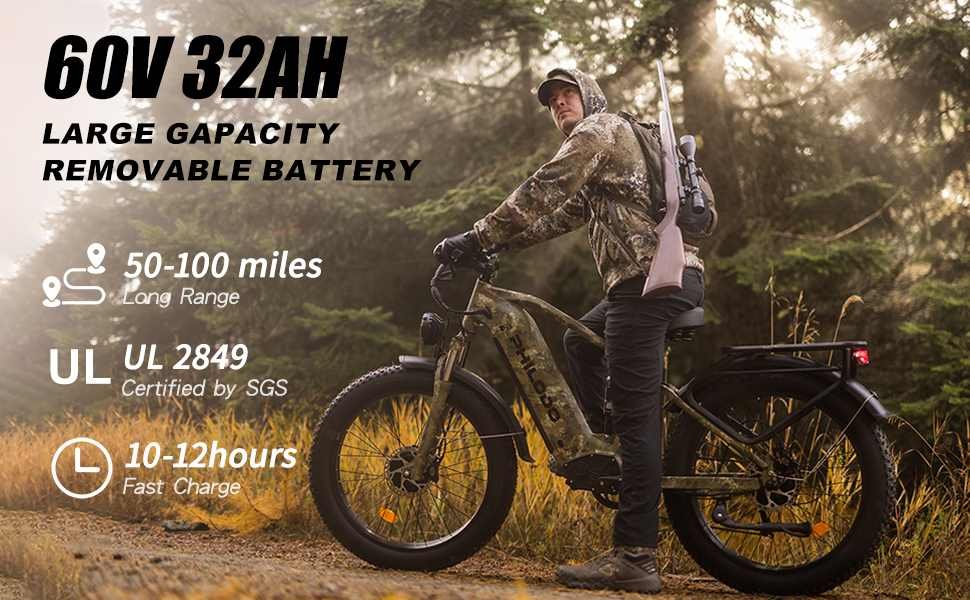
Battery capacity is measured in watt-hours (Wh), calculated by multiplying voltage by amp-hours. For hunting, you’ll want at least 650Wh, with 720Wh or more being ideal for full-day excursions. Realistically, expect 30-50 miles of range in mountainous terrain with gear, not the 60+ miles often advertised for ideal conditions. Cold weather significantly reduces battery efficiency, so plan accordingly if you hunt in winter conditions.
3. Tires, Suspension, and Brakes: The Contact Points
- Fat Tires: 4.0-inch or wider tires are practically mandatory. They provide the flotation needed for mud, sand, and snow, and their low pressure (10-15 PSI) helps absorb terrain impacts while reducing puncture risk.
- Suspension: A front suspension fork is essential for comfort and control. More premium bikes offer both front and rear suspension for truly rough terrain.
- Brakes: Hydraulic disc brakes are strongly recommended over mechanical ones. When you’re descending a steep hill with 100 pounds of elk meat in a trailer, you’ll appreciate the consistent, powerful stopping capability.
4. Load Capacity and Accessories
Check the manufacturer’s payload rating carefully. You’ll need capacity for your body weight plus all gear and any game you plan to transport. Many quality hunting e-bikes offer 300-400 pound capacities. Also consider accessory compatibility—racks, game carts, and weapon mounts transform a bike from transportation to a complete hunting system.
| Feature | Mid-Drive Motor | Hub Motor |
|---|---|---|
| Hill Climbing | Excellent – leverages gearing for torque multiplication | Struggles on steep, sustained grades |
| Battery Efficiency | 20-30% more efficient in hilly terrain | Higher consumption of elevation changes |
| Weight Distribution | Centered weight for better handling | Rear-biased, less stable with cargo |
| Maintenance | More chain wear | Minimal – motor isolated from drivetrain |
| Best Terrain | Mountainous, extreme terrain | Flat to moderate hills |
Understanding E-Bike Classes and Where You Can Ride
E-bike regulations can be confusing, but they generally fall into three classes:
- Class 1: Motor assists only when pedaling, assistance stops at 20 mph
- Class 2: Can be propelled by motor alone (throttle), stops assisting at 20 mph
- Class 3: Pedal-assist only, but assistance continues to 28 mph (requires speedometer)
Here’s the crucial part for hunters: On most public lands, e-bikes are classified as motorized vehicles. This means they’re generally restricted to roads and trails already open to motorized use unless specifically designated otherwise. The Washington DNR, for example, explicitly states that e-bikes are “currently only allowed on motorized trails and forest roads open to motorized public use”.
Always check with the specific land management agency before riding. Some areas have pilot programs allowing Class 1 e-bikes on non-motorized trails, but these are exceptions rather than the rule. On private land, you have more flexibility, but still need to consider safety and property considerations.
How Fast is Fast Enough? Understanding E-Bike Speed for Hunting
One of the most common questions hunters ask is about speed, particularly regarding high-wattage systems. Let’s demystify this:
A 3000W e-bike doesn’t mean you’ll be cruising at highway speeds. Actual speed depends on multiple factors: motor winding, controller amperage, tire size, rider weight, and terrain. In a real-world example from an e-bike forum, a rider with a 3000W, 72V system reported a top speed of around 30mph. Another source mentions a 72V 3000W setup reaching 61mph, but this likely represents optimal conditions without the drag of knobby fat tires or hunting gear.
For context, a 72V 4000W system might reach 50+ mph under ideal conditions, but here’s the reality check: Speed is rarely the limiting factor in hunting situations. Most quality hunting e-bikes top out at 20-28 mph to comply with class regulations, and that’s more than sufficient when you’re navigating narrow trails. What matters more is torque for climbing and efficiency for range.
Top Hunting E-Bike Picks: From Premium to Budget-Friendly
There’s no single “best,” but there are must-have features.
1. Key Features of a Good Hunting E-Bike
- 750W–1000W motor (legal sweet spot)
- Fat tires (4” or wider)
- Torque sensor
- Front suspension (or full suspension)
- Rear rack or trailer compatibility
- Range of at least 30–60 miles
Based on extensive testing and hunter feedback, here are some standout models:
2. Premium Performer: QuietKat Apex Pro
Considered by many as the top-tier hunting e-bike, the Apex Pro features a 1000W mid-drive motor, quality components, and QuietKat’s innovative Variable Output Technology that lets you adjust power output to comply with different class regulations. Testers reported hitting 25 mph on flats and maintaining 13 mph up steep hills, all with exceptional control. The main drawback? The premium price tag reflects its premium performance.
3. Best Budget Option: Buzz Centris Folding E-bike
At well under $1,000, this bike proves you don’t need to spend thousands for hunting utility. With a 500W motor, 330-pound capacity, and a practical folding design, it’s perfect for hunters on a budget or those wanting to try e-biking without a major investment. The step-through frame makes mounting easy, even in bulky hunting boots. Just be prepared to upgrade the uncomfortable seat.
4. Exceptional Value: Aventon Aventure
Priced under $2,000, the Aventure offers a compelling blend of features: 750W motor, 80mm front suspension, fat tires, and a remarkable 400-pound payload capacity. With up to 60 miles of range and a camouflage option, it delivers serious hunting capability without the premium price. Multiple reviewers have highlighted it as possibly the best value in hunting e-bikes today.
5. The Workhorse: Bakcou Mule
As the name suggests, this bike is built for hauling. With exceptional load capacity and powerful motor options, it’s designed for hunters who need to transport substantial gear or game. Bakcou has developed a strong reputation in the hunting community for building bikes that can handle backcountry punishment.
| Model | Price Range | Motor | Key Features | Best For |
|---|---|---|---|---|
| QuietKat Apex Pro View Product | Premium ($4,000+) | 1000W Mid-Drive | Variable Output Technology, quality components | Hunters want top performance regardless of cost |
| Bakcou Scout View Product | High ($3,000-$4,000) | 750W-1000W Mid-Drive | Trail-optimized, smooth ride | Technical terrain and trail riding |
| Aventon Aventure View Product | Mid ($1,500-$2,000) | 750W Hub Drive | 400lb capacity, excellent value | Budget-conscious hunters need capability |
| Buzz CentrisView Product | Budget (Under $1,000) | 500W Hub Drive | Folding design, step-through frame | First-time e-bike hunters or those on a tight budget |
The 7-Day Deer Rule and E-Bikes: A Powerful Combination
Experienced whitetail hunters often reference the “7-Day Rule”—the observation that mature bucks tend to reappear in specific locations during roughly the same week each year. This pattern, driven by photoperiodism and hormonal cycles, creates predictable movement windows.
E-bikes synergize perfectly with this hunting strategy. They allow you to:
- Scout multiple locations during the off-season without disturbing the area excessively
- Quickly check trail cameras across a large property as the predicted date approaches
- Move stealthily to your stand during that critical window without alerting deer
- Return repeatedly with minimal scent trail and disturbance
As one hunter explained, success comes “not from luck, but from learning a buck’s schedule—and being in the woods when his clock says it’s time to move”. An e-bike helps you be there without tipping your hand.
Can You Really Haul Game with an E-Bike?
This is perhaps the most practical concern for hunters. The short answer is yes, absolutely. The long answer involves understanding capacity and using the right equipment.
Most quality hunting e-bikes have payload capacities of 300-400 pounds, which need to cover the rider, gear, and any game. For larger game like elk, you’ll need a trailer. Purpose-built game trailers with a single wheel (which tracks better on narrow trails) can typically handle 200-300 pounds of game.
Remember that towing significantly impacts your battery range—expect to use 30-40% more power when pulling a loaded trailer. This is where bikes with dual battery options or larger capacity batteries prove their worth. The combination of a capable e-bike and a good trailer completely transforms the pack-out experience, turning what might be multiple grueling trips into a single, manageable ride.
The Regulatory Landscape: Where Can You Actually Ride?
E-bike regulations are evolving and vary significantly by location:
1. Public Land Complexities
On federal lands managed by the US Forest Service and BLM, e-bikes are generally classified as motorized vehicles and restricted to designated motorized trails and roads. Some districts may have specific allowances, but these are exceptions. Always check the official Motor Vehicle Use Map for the area you’ll be hunting.
2. State-Specific Regulations
States are developing their own frameworks. Washington state, for example, has clear definitions for e-bike classes but currently restricts them to motorized trails unless specifically designated otherwise. Other states may have different rules, particularly for wildlife management areas.
3. Why Some Trails Prohibit E-Bikes
Common concerns include:
- Potential for increased trail damage compared to traditional bikes
- Safety conflicts with other trail users due to higher speeds
- Preservation of non-motorized experiences in designated areas
- Concerns about battery fires in remote areas
These concerns have led some land managers to restrict e-bike access, particularly on non-motorized trails.
Finding the Best Hunting E-Bike Under $2,000
You don’t need to spend $5,000 to get a capable hunting e-bike. The market under $2,000 has improved dramatically, offering bikes with legitimate backcountry capability. Here’s what to look for:
1. The Essential Checklist for Budget Hunting E-Bikes:
- ✓ 750W+ motor (provides adequate power for hills and loads)
- ✓ 80Nm+ torque (crucial for climbing while loaded)
- ✓ 650Wh+ battery (for realistic day-long range)
- ✓ 4.0-inch+ fat tires (traction in variable conditions)
- ✓ Hydraulic disc brakes (reliable stopping power)
- ✓ 300lb+ payload capacity (rider + gear + potential game)
2. Top Budget Contenders
The Aventon Aventure consistently appears as a top recommendation in this category, offering an impressive spec sheet for under $2,000. The Lectric XP represents an even more budget-friendly option, while the EBycco EB7Pro earns praise for its 85Nm torque, specifically suited for climbing.
The trade-offs at this price point typically involve heavier frames, simpler suspension systems, and hub motors rather than mid-drives. However, for many hunting applications—particularly in moderate terrain—these bikes deliver exceptional value and capability.
3. Alternative Options For Electric Bikes For Hunting
| Model | Motor | Battery | Top Speed | Range | Payload | Best For |
|---|---|---|---|---|---|---|
| Aventon Aventure 2 View Product | 750W (Peak 1130W) | 48V 15Ah | 28 mph | 60 miles | 400 lbs | Best overall value |
| Himiway Zebra View Product | 750W | 48V 20Ah | 28 mph | 80 miles | 400 lbs | Long-range hunting |
| QuietKat RidgeRunner View Product | 1000W | 48V 14.5Ah | 28 mph | 60 miles | 325 lbs | Premium off-road |
| Rambo R750 XP View Product | 750W | 48V 15Ah | 28 mph | 45 miles | 300 lbs | Budget hunting |
| RadRover 6 Plus View Product | 750W | 48V 14Ah | 20 mph | 45 miles | 275 lbs | Legal trail use |
| Product Name | Price Range | |
|---|---|---|
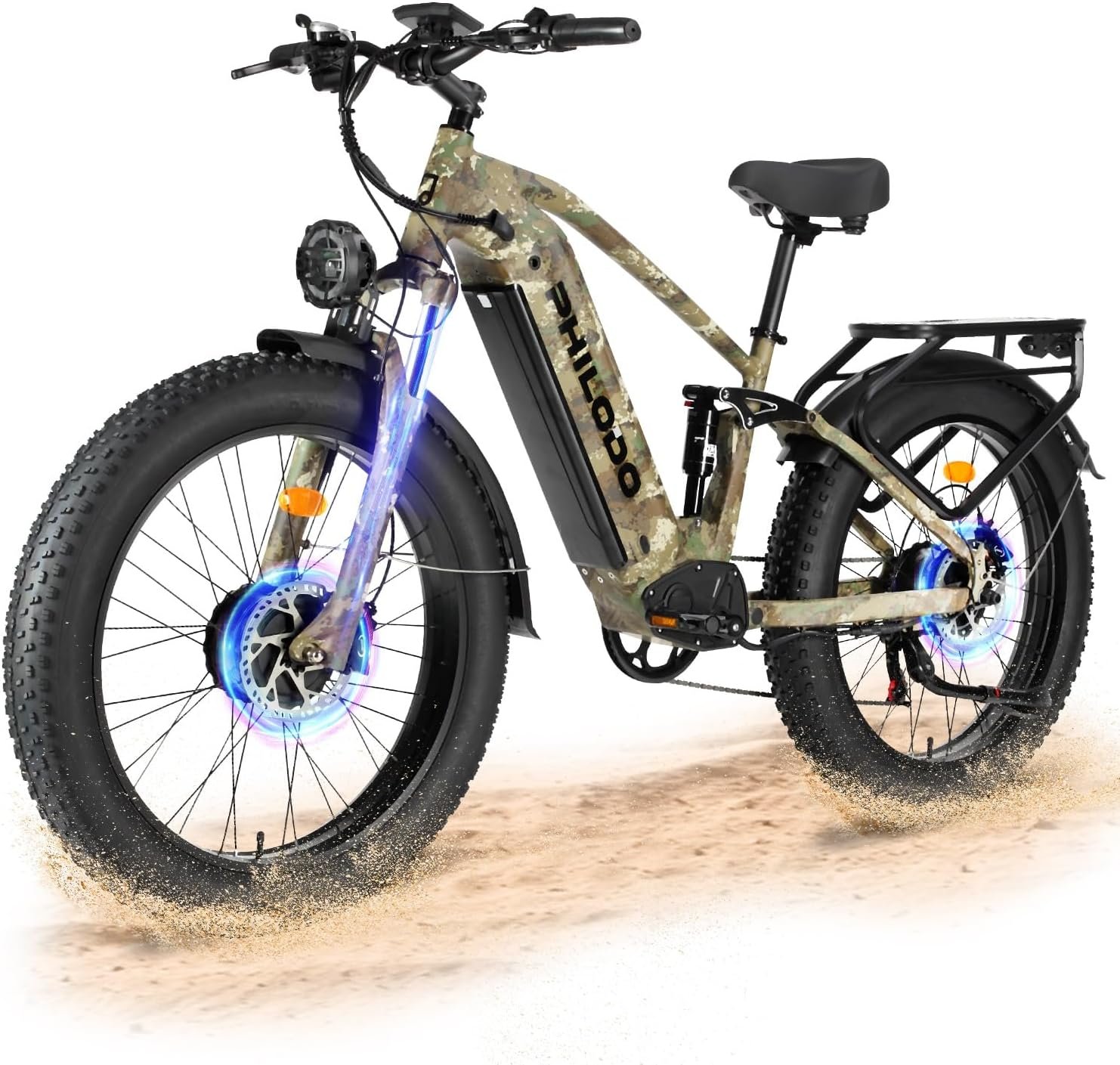
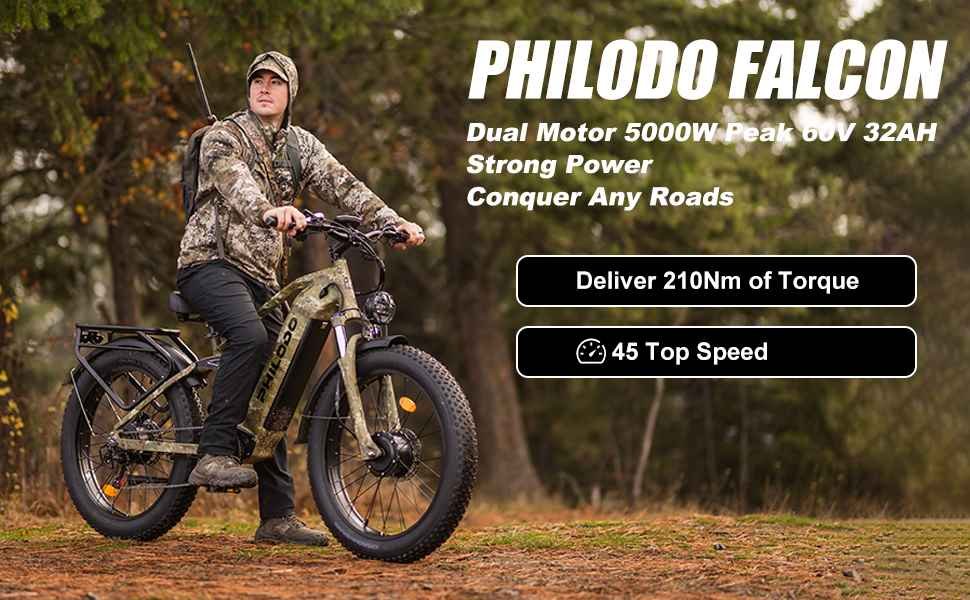
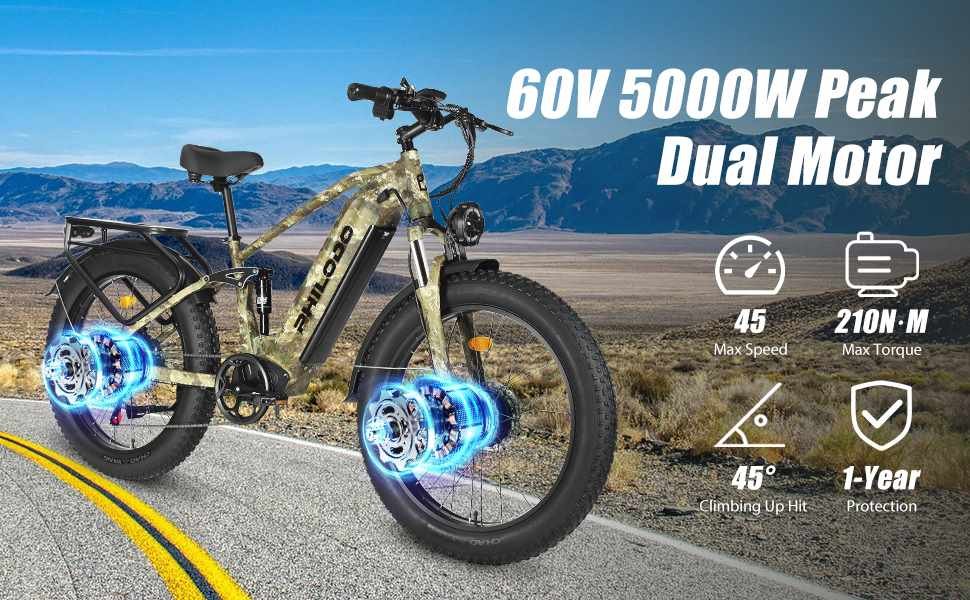
| PHILODO Falcon 60V 32AH Off-Road Electric Bike – 5000W Dual Motor Hunting Ebike, Fat Tire Full Suspension Dirt Bike for Adults, Long Range Snow/Sand Electric Bicycle | $1,399.00 – $1,599.00 | View Latest Deals |
| EBycco 6000W Peak Dual Motor Ebike for Adults Electric Bike 52V 32AH, Max 40-45 MPH, 100 Miles Long Range, Full Suspension Hydraulic Disc Brake E-Bikes, 24″/26″ Fat Tire Hunting Electric Bicycle | $1,319.00 – $1,399.00 | View Latest Deals |
| Ebicycol 5000W Peak Dual Motor Fat Tire Electric Bike 24Inch, 40-45MPH 100 Miles, 52V 32AH BMS Long Range Battery Hydraulic Disc Brake Commuter Adults Electric Bicycles Ebike for Men Women | $1,179.00 – $1,179.00 | View Latest Deals |
| E·Bycco DAHON Electric Bike for Adults, 750W Torque-Sensor-Ebike, Max 95Miles, 26″ x4.0 Fat-Tire Electric Bicycle, 48V 20AH Front Suspension Moutain Off-Road Hunting All-Terrain E-Bike | $1,499.00 – $1,599.00 | View Latest Deals |
| Seemoon 6000W Dual Motor Ebike,60V 30Ah Battery,45 MPH up to120Mile,24″/26″ Fat Tire Mountain Ebike for Hunting Off-Road, Full Suspension,7-Speed, Hydraulic Brakes | $1,299.00 – $1,499.00 | View Latest Deals |
| Load More Options | ||
Accessories That Make a Hunting E-Bike Actually Useful
| Accessory | Why It Matters | |
|---|---|---|
| Cargo Trailer | Pull deer or elk quarters | View Product |
| Pannier Bags | Carry gear silently | View Product |
| Studded Tires | Late-season hunting | View Product |
| Handlebar Rifle Mount | Hands-free access | View Product |
| Extra Battery | All-day range | View Product |
Conclusion: Are Hunting E-Bikes Worth the Investment?
After examining every angle—from technical specifications to practical field applications—the answer for most hunters is a resounding yes. E-bikes represent more than just another piece of gear; they’re a paradigm shift in how we access hunting areas. They extend your effective range, conserve your energy for the hunt itself, dramatically reduce your auditory and scent impact on game, and transform the daunting task of packing out game from a grueling endurance test to a manageable ride.
The investment—whether $1,000 for a budget model or $5,000+ for a premium setup—pays dividends in expanded opportunities and reduced physical strain. Like any tool, their value depends on how you use them and where you hunt. For public land hunters facing access restrictions, research regulations carefully. For private land hunters, e-bikes offer perhaps the single greatest advantage in stealthy access currently available.
As one experienced hunter turned e-bike convert put it: “Once you ride one, I have no doubt it will open your mind to the possibilities”. In the evolving landscape of hunting technology, e-bikes have proven they’re here to stay—not as a gimmick, but as a genuinely transformative tool for the modern hunter.
Frequently Asked Questions
- Can you legally use an e-bike on public hunting land?
Regulations vary significantly by location and managing agency. Generally, on federal lands like those managed by the US Forest Service or BLM, e-bikes are classified as motorized vehicles and are restricted to roads and trails already open to motorized use. Always check the specific regulations for the area you plan to hunt, as some locations may have special designations or pilot programs allowing e-bike access. - What is the realistic range I can expect from a hunting e-bike?
Manufacturer range estimates are typically based on ideal conditions: flat terrain, a light rider, moderate temperatures, and minimal assist. For actual hunting conditions—hilly terrain, heavier loads, colder weather—expect 30-50 miles from a 720Wh battery rather than the 60+ miles often advertised. Factors like tire pressure, wind, and how much you use throttle versus pedal assist also significantly impact range. - How much weight can a hunting e-bike actually carry?
Quality hunting e-bikes typically have payload capacities between 300 – 400 pounds, which needs to account for the rider, gear, and any harvested game. For larger game, most hunters use a single-wheel trailer rated for 200-300 pounds. It’s crucial to check the manufacturer’s specific payload rating and understand that exceeding it can accelerate wear on components like wheels, spokes, and frame joints. - What’s the difference between mid-drive and hub motors for hunting?
Mid-drive motors mount at the bike’s pedals and power through the drivetrain, allowing them to leverage the bike’s gears for exceptional torque on steep climbs. Hub motors are located in the wheel hub and deliver power directly; they’re often less expensive but can struggle on sustained steep grades. Mid-drives also offer better weight distribution and battery efficiency in hilly terrain, making them preferred for demanding hunting applications. - Do I need a special license or registration for a hunting e-bike?
In most states, e-bikes that meet the three-class system (with motors 750W or less and speeds limited to 28 mph) do not require special licensing, registration, or insurance when operated as bicycles. However, more powerful bikes that exceed these specifications may be classified differently. Always check your state’s specific regulations, as requirements can vary, especially for higher-powered models. - How Fast Is 3000W in MPH?
This is where things get… spicy. A 3000W e-bike can hit:- 35–45 mph
- Sometimes more with 72V setups
But here’s the catch:- Usually illegal on public land
- Classified as motor vehicles
- Overkill for hunting
For hunting, torque beats speed every time. - How Fast Is 72V 3000W in MPH?
With the right controller:- 45–55 mph (flat ground)
- Faster downhill
That’s motorcycle territory. Great for YouTube. Bad for legality. - How Fast Would a 72V 4000W E-Bike Go?
Now we’re officially in “why?” territory. - Expect:
- 50–60+ mph
- Serious safety risks
- Zero trail access
- Guaranteed legal issues
For hunting? Totally unnecessary. - Will an Electric Bike Pull a Deer?
Yes—and surprisingly well.
With:- A cargo trailer
- 750W+ motor
- Low gear torque
Hunters regularly haul:- Whitetail deer
- Elk quarters
- Full camping setups
It’s like having a silent pack mule that doesn’t eat or complain. - Are electric bikes legal for hunting on public land?
Yes, in many areas—but rules vary by state and land agency. Always check local regulations. - Can an e-bike replace an ATV for hunting?
For many hunters, yes—especially on restricted or non-motorized trails. - What motor size is best for hunting e-bikes?
A 750W to 1000W motor offers the best balance of power and legality. - Do e-bikes scare away game?
Far less than ATVs. They’re quiet and blend into natural trail noise. - Are high-power e-bikes (3000W+) good for hunting?
No. They’re often illegal and unnecessary for real hunting scenarios.
| Electric Bike Collections Near You | |
|---|---|
 |  |
| Buy From Amazon | Buy From Walmart |
You Might Also Like
- The 2026 Hoverboard Speed Guide
- Hover-1 Titan Review: How Fast Is It Really?
- Hoverboard Best Sellers on Amazon 2025
- Hoverboard Cheapest Price
- All Terrain Hoverboard With Bluetooth

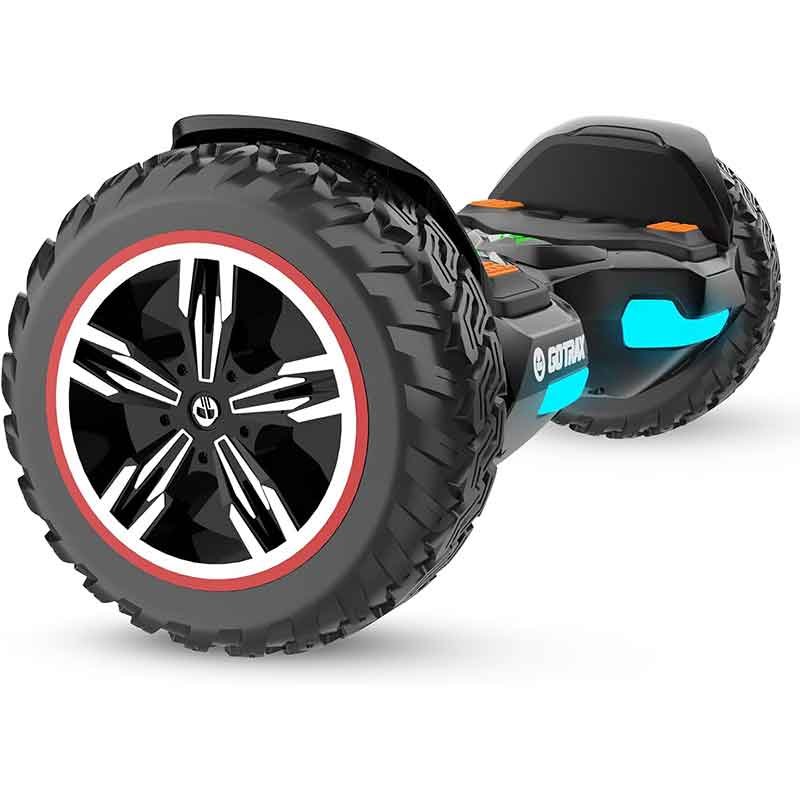
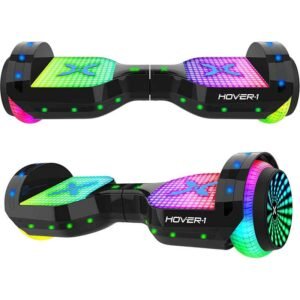
 H1 is powered by two 200W motors that enable it to climb 15 degree inclines and reach a 9 mph top speed. The 6.5″ solid wheels provide a smooth and enjoyable ride.