

What Makes a Yakima Hitch Bike Rack Worth Your Money in 2026?
So you’re standing in your garage, staring at two bikes and a car with absolutely no roof rails, wondering how on earth you’re supposed to get everyone to the trailhead this weekend. Sound familiar? That’s usually the moment people start googling “Yakima hitch bike rack” at 11 pm, half-panicked, half-hopeful.
Yakima Hitch Bike Rack – I get it. I’ve been there myself, squinting at product photos trying to figure out if a rack that costs as much as a decent bike is actually worth it.
Here’s the short answer: for most people who own a car with a hitch receiver, a Yakima hitch bike rack is genuinely one of the smartest cycling purchases you’ll ever make. But “genuinely smart” doesn’t mean “one-size-fits-all,” so let’s dig into why these racks have such a loyal following, which model actually fits your life, and what’s changed in Yakima’s lineup heading into this year.
What Exactly Is a Yakima Hitch Bike Rack?
Let’s start basic, because not everyone speaks fluent bike-rack jargon. A hitch bike rack is a carrier that plugs into your vehicle’s hitch receiver — that square tube usually tucked under your rear bumper — instead of sitting on your roof or hanging off your trunk. A Yakima hitch bike rack does exactly that, except it’s engineered by a company that’s been building vehicle cargo systems since the 1970s.
Think of it like the difference between carrying groceries in a flimsy plastic bag versus a sturdy canvas tote with reinforced handles. Both technically “carry stuff,” but only one is built to survive the walk from the car to your kitchen without a blowout. That’s the mentality Yakima brings to hitch-mounted transport.
Why Riders Keep Choosing Yakima
Built for Real-World Abuse
Potholes, gravel roads, sudden braking — a hitch-mounted rack takes a beating that most people never think about until something rattles loose. Yakima builds its hitch bike rack systems around steel and aluminum frames with ratcheting arms and cradle systems designed to keep bikes locked in place even when the road gets ugly.


It’s not flashy engineering, but it’s the kind of unglamorous durability that matters at 65 mph on the highway.
Compatibility That Doesn’t Play Favorites
Here’s something that trips people up: not every bike rack plays nice with every bike. Fat tire bikes, carbon frames, kids’ bikes with tiny wheelbases, full-suspension mountain bikes — they all have different needs.
A well-designed Yakima hitch rack is built with adjustable trays, no-frame-contact designs, and optional adapters so it doesn’t discriminate against your weird, oddly-shaped bike collection.



The Different Types of Yakima Hitch Bike Racks Explained
Not all hitch racks are created equal, and Yakima actually makes two fundamentally different styles.
Platform-Style Yakima Hitch Bike Racks (Tray Racks)
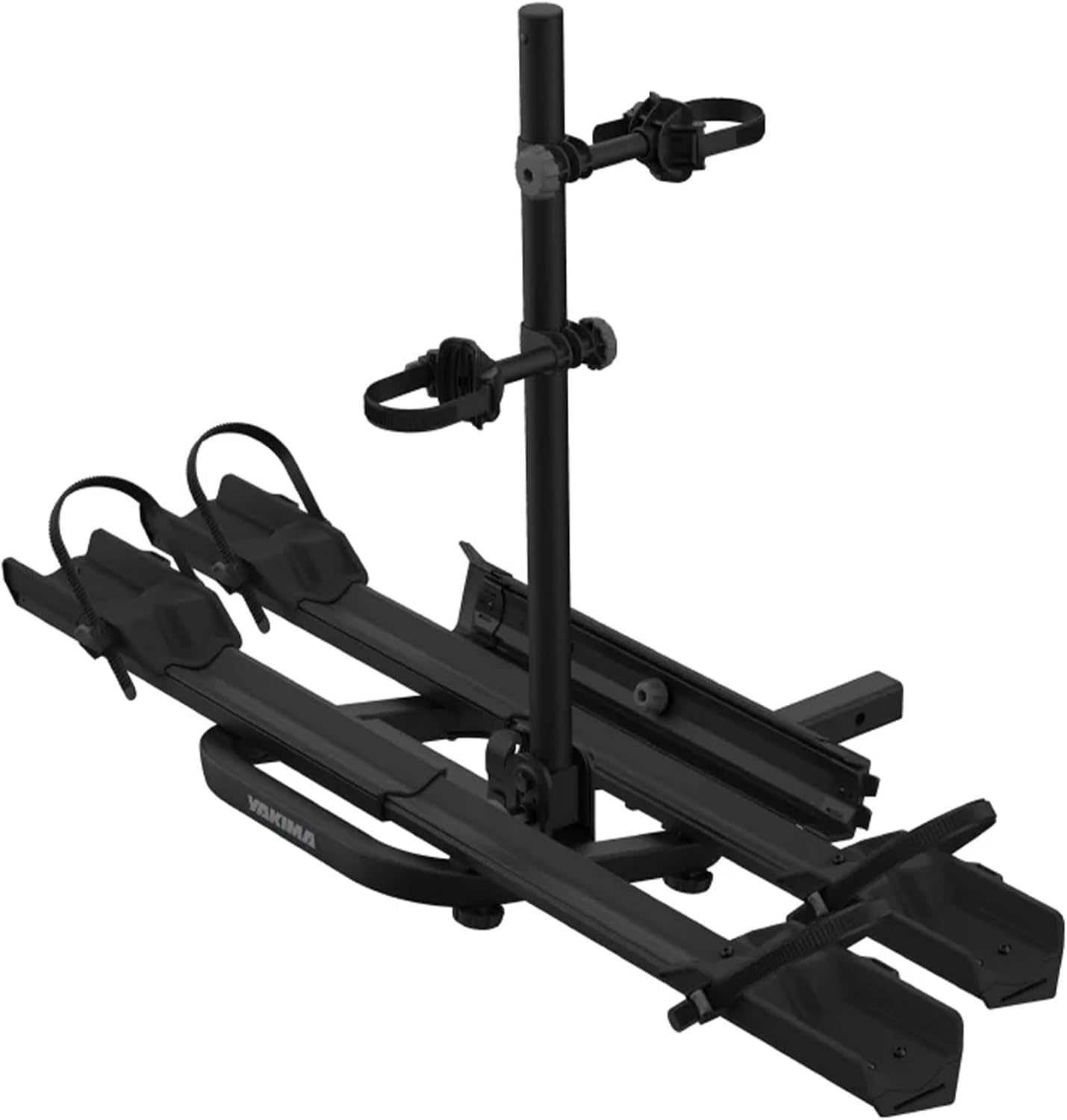
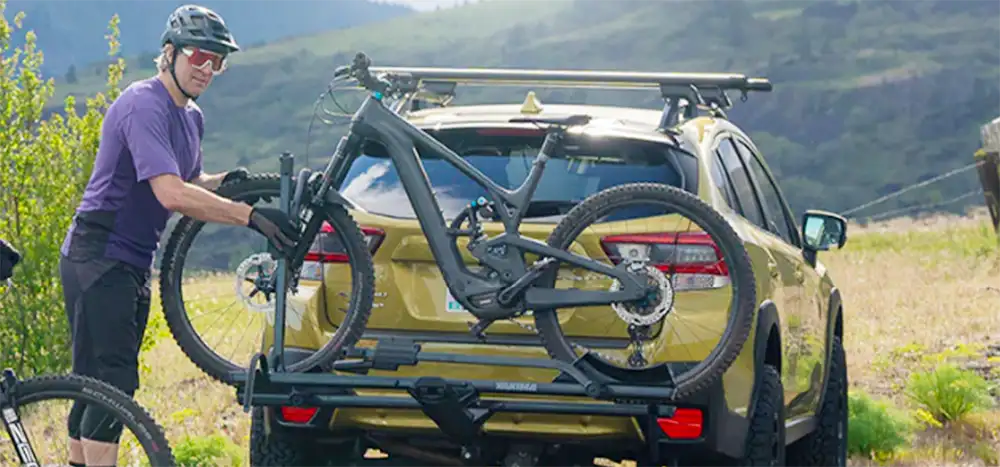
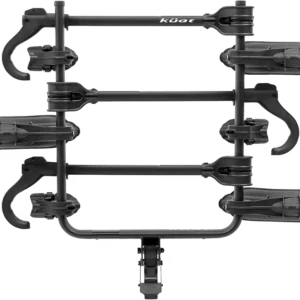
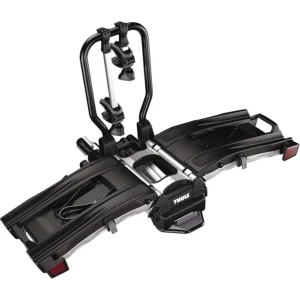
These are the trays you’ve probably seen at trailheads — each bike sits in its own individual cradle, wheels locked down by ratcheting arms, with zero contact between the frame and the rack itself. Models like the HoldUp and StepUp fall into this category.
Platform-style hitch racks tend to be pricier, but they’re gentler on your bike’s finish and handle heavier e-bikes far better than hanging designs.
Hanging-Style Yakima Hitch Racks
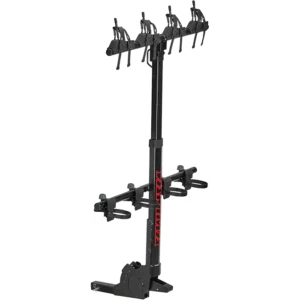
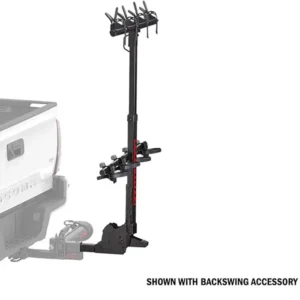
These racks suspend bikes by their top tube using hooks and support arms — think of it like hanging coats on a rack rather than parking cars in individual garage bays. They’re lighter, more affordable, and easier to store, but they’re pickier about frame shapes and can be rougher on your paint job if you’re not careful with padding.
Yakima’s 2026 Hitch Bike Rack Lineup: What’s New
Yakima refreshed its cycling portfolio earlier this year, and the changes are worth knowing about if you’re shopping right now.
The Updated HoldUp Hitch Bike Rack
The HoldUp remains one of Yakima’s most popular platform racks, and the newest version leans into tilt-access convenience, StrongArm wheel mounts, and genuinely tool-free installation.
Yakima’s spring lineup update strengthens core categories while expanding premium and enthusiast-focused options across cycling segments, and the HoldUp sits right at the center of that push. It’s expandable up to four bikes with an add-on unit, which is a nice bit of future-proofing if your family’s cycling habit grows.
StepUp and StepUp Swing
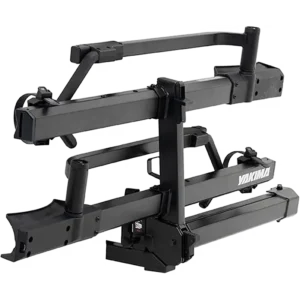
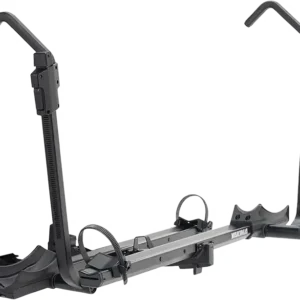
Yakima introduced an all-new StepUp and StepUp Swing as part of its expanded hitch and truck bike rack portfolio, with the whole collection built around one idea: easier access to your vehicle without unloading bikes first. Folding wheel cradles improve storage, while front-wheel loading and expanded compatibility support heavier eMTBs.
If you’ve ever had to unload three bikes just to grab your cooler out of the trunk, you’ll understand why the swing-away feature is such a big deal.
OverHaul Shadow Edition
A limited special edition, the OverHaul Shadow Edition rounds out the current lineup for riders who want something with a little more visual flair without sacrificing the mechanical guts that make Yakima’s hitch racks reliable in the first place.
Yakima Hitch Bike Rack Comparison Table
| Model | Style | Bike Capacity | Best For | Approx. Price |
|---|---|---|---|---|
| HoldUp | Platform/tray | 2 (expandable to 4) | Mixed bike types, families | $600–$900 |
| StepUp | Platform/tray | 2–4 | Easy tailgate access | $700–$1,000 |
| StepUp Swing | Platform/swing-away | 2–4 | Frequent trunk access | $800–$1,100 |
| RidgeBack | Platform/tilt-away | 2 | Budget-conscious platform buyers | $400–$500 |
| DoubleDown | Hanging/tilting | 4 | Non-ebike, larger groups | $200–$250 |
| SingleSpeed | Platform | 1 | Solo commuters, lightweight setups | $250–$350 |
Prices fluctuate depending on retailer sales and hitch class, so treat these as ballpark figures rather than gospel.
How to Choose the Right Yakima Hitch Bike Rack for Your Vehicle
Hitch Receiver Size Matters
Before you fall in love with a particular Yakima hitch bike rack, check your hitch receiver size. Most passenger vehicles use a 1.25-inch receiver, while trucks and SUVs often have the beefier 2-inch class. Buying a rack rated for the wrong receiver is like trying to jam a square peg into a round hole — it just won’t work, no matter how much you want it to.
How Many Bikes Do You Actually Need to Carry?
Be honest with yourself here. If it’s just you and a weekend riding buddy, a 2-bike hitch rack saves weight, money, and driveway storage space. If you’ve got a whole family of riders, a 4-bike platform rack or an expandable model like the HoldUp makes a lot more sense, even if it costs more upfront.
Yakima Hitch Bike Racks and E-Bike Compatibility
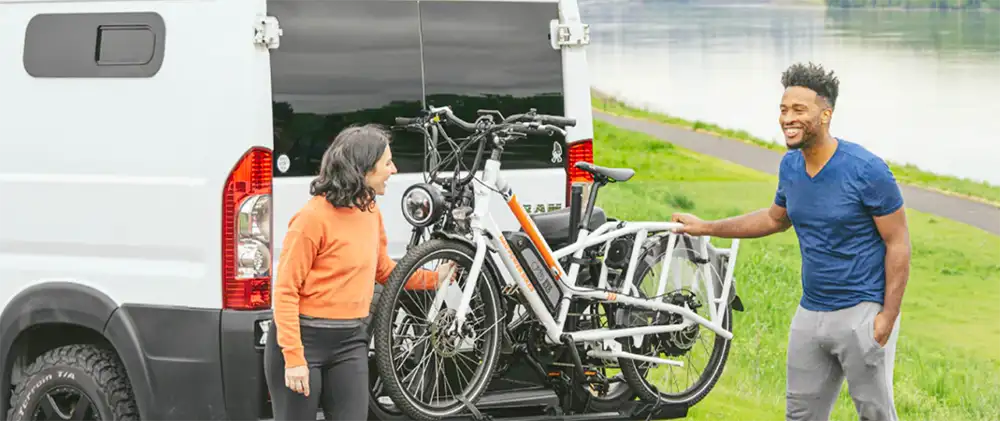
E-bikes are heavy — often 50 to 70 pounds — and that changes the math entirely. A cheap hanging rack simply isn’t rated for that kind of weight, and trying to force it is asking for a snapped hook on the highway.
Yakima’s platform-style hitch racks, particularly the HoldUp and StepUp, are specifically reinforced for e-bike loads, with wider trays and stronger ratcheting arms. If e-bikes are part of your garage lineup, don’t even consider the hanging-style options.
Installing Your Yakima Hitch Bike Rack: Is It Really Tool-Free?
Mostly, yes. Most current Yakima hitch rack models use a hand-tightened knob or lever system to lock into the receiver, meaning you genuinely don’t need a wrench for day-to-day use.
That said, first-time setup sometimes benefits from a rubber mallet and a little patience — hitch tolerances vary slightly between vehicles, and a snug fit occasionally takes a bit of wiggling. Once it’s dialed in, though, loading and unloading becomes a 30-second job.
Yakima Hitch Bike Rack Security Features You Shouldn’t Ignore
Nobody wants to walk out of a trailhead parking lot to find their bike missing. Locking cores integrated into the hitch pin, frame cradles, and wheel straps are standard across most Yakima hitch rack models, and many also support add-on cable locks that thread through your bike frame.
It’s not a bulletproof anti-theft vault, but it’s a meaningful deterrent — the kind that makes a would-be thief move on to an easier target.
Price Range: What Should You Expect to Pay?
Entry-level hanging-style Yakima hitch bike racks start around $200, while premium platform models with swing-away access and e-bike reinforcement can run past $1,000. It’s a wide range, I know. But think of it less as “how much does a bike rack cost” and more as “how much is it worth to never scratch my car door loading bikes again.” For a lot of riders, that peace of mind justifies the higher-end platform options.
Yakima Hitch Bike Rack vs Roof Racks vs Trunk Racks
Roof racks keep your hitch free but require you to hoist bikes overhead — not fun if you’re short, tired, or dealing with a heavy e-bike. Trunk racks are the cheapest option but put direct pressure on your car’s paint and trunk lid, which can lead to scuffs over time.
A Yakima hitch bike rack splits the difference: lower loading height than roof racks, and none of the frame-contact issues that plague trunk-mounted systems. For most drivers with a hitch already installed, it’s simply the more practical choice.
Maintenance Tips to Keep Your Yakima Hitch Rack Running Smoothly
A little upkeep goes a long way. Rinse road salt and grime off after winter drives, keep moving parts lightly lubricated, and periodically check that ratcheting arms haven’t loosened from vibration. Store your rack somewhere dry when it’s not in use — rust is the enemy of every hitch-mounted system, Yakima or otherwise.
Common Mistakes People Make With Hitch Bike Racks
Overloading beyond the stated weight limit, forgetting to tighten the hitch pin fully, and ignoring rear license plate or taillight visibility laws are the three mistakes I see most often. None of them are dramatic, but all of them are avoidable with a five-minute pre-drive check.
Final Verdict: Is a Yakima Hitch Bike Rack Worth It?
If you’ve got a hitch receiver and regularly transport more than one bike, yes — a Yakima hitch bike rack is worth the investment. It’s not the cheapest option on the market, but between the build quality, the e-bike-ready engineering, and the genuinely useful swing-away access on newer models, it earns its price tag through years of reliable use rather than flashy marketing claims.
Conclusion
Choosing a bike rack shouldn’t feel like defusing a bomb, but I know the sheer number of options out there can make it feel that way. The good news is that Yakima has spent decades refining exactly this problem, and the current lineup — from the budget-friendly RidgeBack to the access-focused StepUp Swing — covers pretty much every rider’s needs.
Match the rack to your hitch size, your bike count, and whether e-bikes are in the mix, and you’ll end up with a setup that just quietly works, trip after trip, without ever making you think twice about it.
| Bike Rack Collections Near You | |
|---|---|
 |
 |
| Get Amazon Special Offers | Get Walmart Special Offers |
FAQs About Yakima Hitch Bike Rack
You'll need an aftermarket hitch receiver installed first — most auto
Will a Yakima hitch bike rack fit my car if I don't have a factory hitch? shops or trailer dealers can do this affordably, and once it's in, any properly sized Yakima hitch rack will bolt right on.
Can I still open my trunk or tailgate with a Yakima hitch bike rack installed?
It depends on the model. Fixed racks may block full trunk access, but tilt-away and swing-away designs like the RidgeBack and StepUp Swing are built specifically to solve that problem.
How much weight can a Yakima hitch bike rack handle per bike?
It varies by model, but most platform-style racks handle 60 to 80 pounds per bike, which comfortably covers even heavier e-bikes, while hanging-style racks typically top out lower.
Do I need to remove my Yakima hitch bike rack when I'm not carrying bikes?
Not necessarily, though many riders prefer to since it can add a few inches to your vehicle's overall length and slightly affect parking or backing into tight spots.
Are Yakima hitch bike racks compatible with kids' bikes?
Yes, though smaller frames sometimes need an adapter bar to sit securely in adult-sized trays or hooks, so it's worth checking your specific model's minimum wheelbase requirement.
You Might Also Like
- Saris Bike Rack: Choosing Your Perfect Ride
- Thule Hitch Rack Bike Guide: Model in 2026
- Kuat Piston Pro X Setup: Installing and Attaching
- Is a Kuat Bike Rack Worth It? The Honest 2026 Buyer’s Guide
- Most Reliable Hoverboard Brand: Your Ultimate Buyer’s Guide
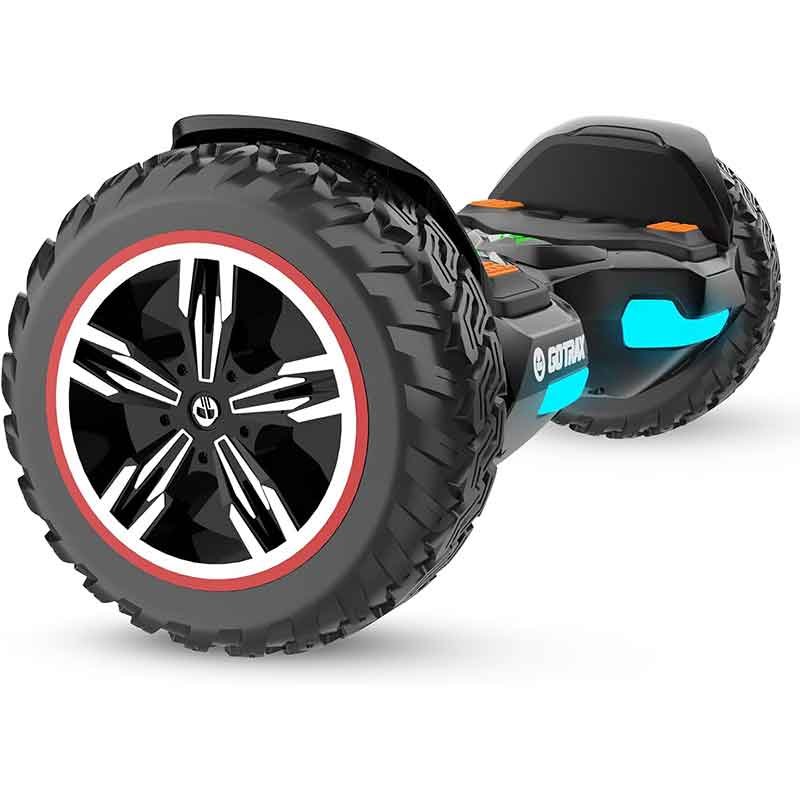
 H1 is powered by two 200W motors that enable it to climb 15 degree inclines and reach a 9 mph top speed. The 6.5″ solid wheels provide a smooth and enjoyable ride.